

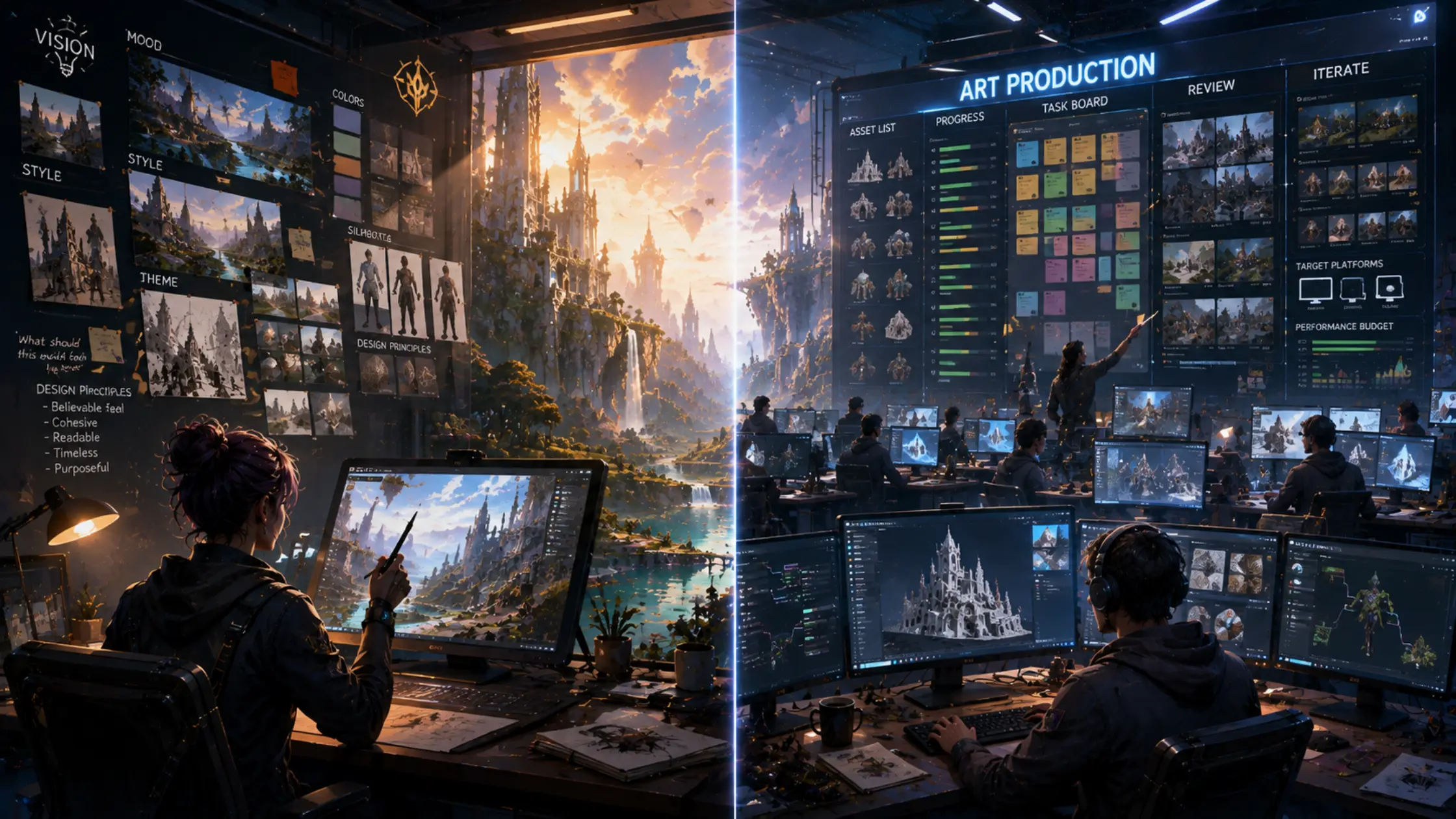
Confusing the role of the art director with the management of art output is one of the industry’s most expensive organizational mistakes.
The title of Art Director in game development carries different meaning in different studios, and that variance is a significant source of organizational dysfunction. In some studios, the Art Director is primarily a senior artist who approves work and sets quality bars. In others, they’re primarily a manager who coordinates team output. In the best cases, they’re something distinct from both: a person whose primary job is to define and defend the visual vision of a project across all the decisions, trade-offs, and pressures that production creates.
When studios blur the line between art direction and art production management, both roles suffer. A strong art director who is also carrying production management responsibilities will make vision decisions under time pressure, approve work to meet schedules rather than to meet standards, and gradually compromise the coherent visual identity that makes a game’s art memorable. Meanwhile, the production coordination that’s now mixed into their role gets done reactively, with insufficient attention to pipeline health and team capacity planning.
The art director’s job is to know what the game should look like. The art production manager’s job is to make sure it gets made. Giving both jobs to the same person usually means neither gets done properly.
The best art directors are doing something that’s difficult to describe in job-description language: they’re maintaining an internal model of the game’s visual world and filtering every decision through it. Does this character design belong in this world? Does this environmental palette choice break the established language of this region? Does this UI treatment feel consistent with the game’s tone? These questions require deep aesthetic conviction and the authority to act on that conviction, even under schedule pressure.
Strong art direction is also cumulative. A project with clear visual direction in pre-production builds a shared reference set that makes individual production decisions faster and more consistent. Art directors who invest in that reference infrastructure style guides, annotated exemplars, design principles documents that go beyond ‘make it look good’ create compounding returns as the production scales. Those who skip this work to stay reactive end up spending proportionally more time on individual decisions as the team grows, because there’s no shared language to make decisions autonomously.
The relationship between art direction and art production is most healthy when there’s clear separation with structured communication. The art director defines what things should look like and why; the production team executes, scales, and coordinates; feedback loops between the two are regular and deliberate rather than ad hoc. This sounds simple. It requires organizational discipline and, often, some cultural adjustment in studios that have historically treated the art director as a super-senior artist rather than a distinct function.
Productions that get this right tend to have more visual coherence, faster individual decision-making, less rework, and art teams that feel more confident in their work because they understand the logic they’re executing within. These aren’t soft benefits. They’re measurable in schedule performance and asset revision rates. The organizational investment in clear art direction pays back in production efficiency in ways that are underappreciated until you’ve seen a production without it.