

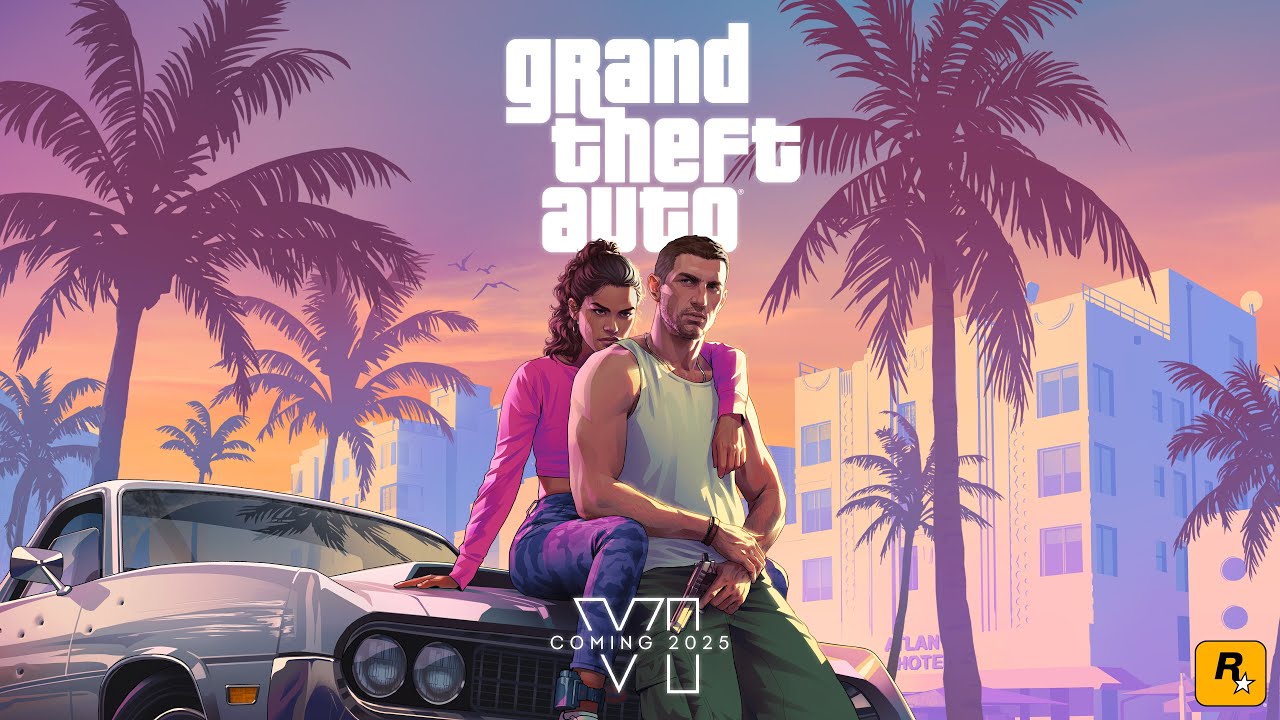
GTA 6’s visual ambitions are real. So is the commercial and technical pressure that will shape what actually ships. Here’s how to think about what we’ll actually see.
The discourse around GTA 6’s visual presentation occupies a space unique in the games industry: a single trailer fragment has been analyzed at the frame level by tens of thousands of people, generating commentary ranging from technically informed to wildly speculative. Rockstar has, characteristically, offered minimal clarification. What fills that silence is a mix of genuine technical analysis and a set of expectations that deserve examination before the game ships.
What the available footage shows is, by any reasonable measure, impressive. The character rendering — particularly the facial performance work — is at the frontier of what real-time engines can produce. The environmental detail in the Vice City sequences suggests a world built at a density consistent with RDR2 rather than GTA V. The simulation depth — the behavior of crowds, the variety of environmental activity — appears to have been a major area of investment.
Every GTA release has shipped a world that was denser, more reactive, and more visually coherent than anything in the genre. Assuming GTA 6 will break that pattern requires a specific argument, not just pessimism.
The realistic expectation should be calibrated against what Rockstar actually ships, not what Rockstar’s trailers imply. Pre-release footage for RDR2 showed visual quality that, on balance, the shipped game met or exceeded on current-gen hardware. GTA V’s pre-release materials showed a version of Los Santos that was very close to what shipped on PS3/360, with the PC and subsequent current-gen versions substantially exceeding it. The pattern suggests that Rockstar’s production standards are high enough that their marketing materials represent actual game output — a standard that is, frankly, unusual for the industry.
The conversation the industry should be having is less about whether GTA 6 will look as good as the trailer and more about what GTA 6 will do to visual expectations for the next generation of open-world games. RDR2 created a reference point that took years to shift — the comparison appeared in discussions of every open-world title that released in its aftermath. GTA 6, if it ships at the quality level Rockstar’s history suggests, will likely do the same.
For studios working in the open-world space, this is relevant in a specific way: the games that succeed in the post-GTA 6 landscape won’t be the ones that try to match its detail density.
They’ll be the ones that clearly understand their own distinct visual proposition and execute it with confidence. The mistake studios made post-RDR2 was trying to compete with its production values on insufficient budgets. The smarter path was always to find a different and defensible visual identity.
What GTA 6 will unambiguously demonstrate is the ceiling of what a sustained ten-year AAA production budget, applied to a single title by a studio with no equal in large-world game production, can achieve. That ceiling is useful as a reference. Mistaking it for a target is a different thing entirely.